Besar difuntos
A wandering, sideways missive on translation from the laundromat (AND ALSO BOOK NEWS ⚡️)

There was a phone update a few months ago that reset my keyboards. It’s been driving me crazy because I switch between an English and Spanish keyboard throughout the day, but often forget (or can’t be bothered) to switch. So I end up writing in both languages on each keyboard, slowly teaching each one the other language so it doesn’t autocorrect to pure nonsense. It’s totally inefficient but it’s how I roll—so unconsciously that it took the update and its ensuing frustration for me to realize that’s what I’d been doing.
Last week, I was writing a translation note for my co-translation of JAWS [tiburón] by Xitlalitl Rodríguez Mendoza, attuned to how full of possibility the space between languages can be. Particularly so when you’re translating such a thing as poetry, where literal meaning is often only part of the truth, and objectivity—of language, of reality—becomes unruly, insufficient.
I was in the headspace of translation as a lens, a mode, a dimension, an expansive, world-building space. (You can read an interview my co-translator Dani and I did here for more on translation theory and our process of translating JAWS.)
So yes, it was a Tuesday like any other when my keyboard autocorrected: “let me know,” to “besar difuntos.”
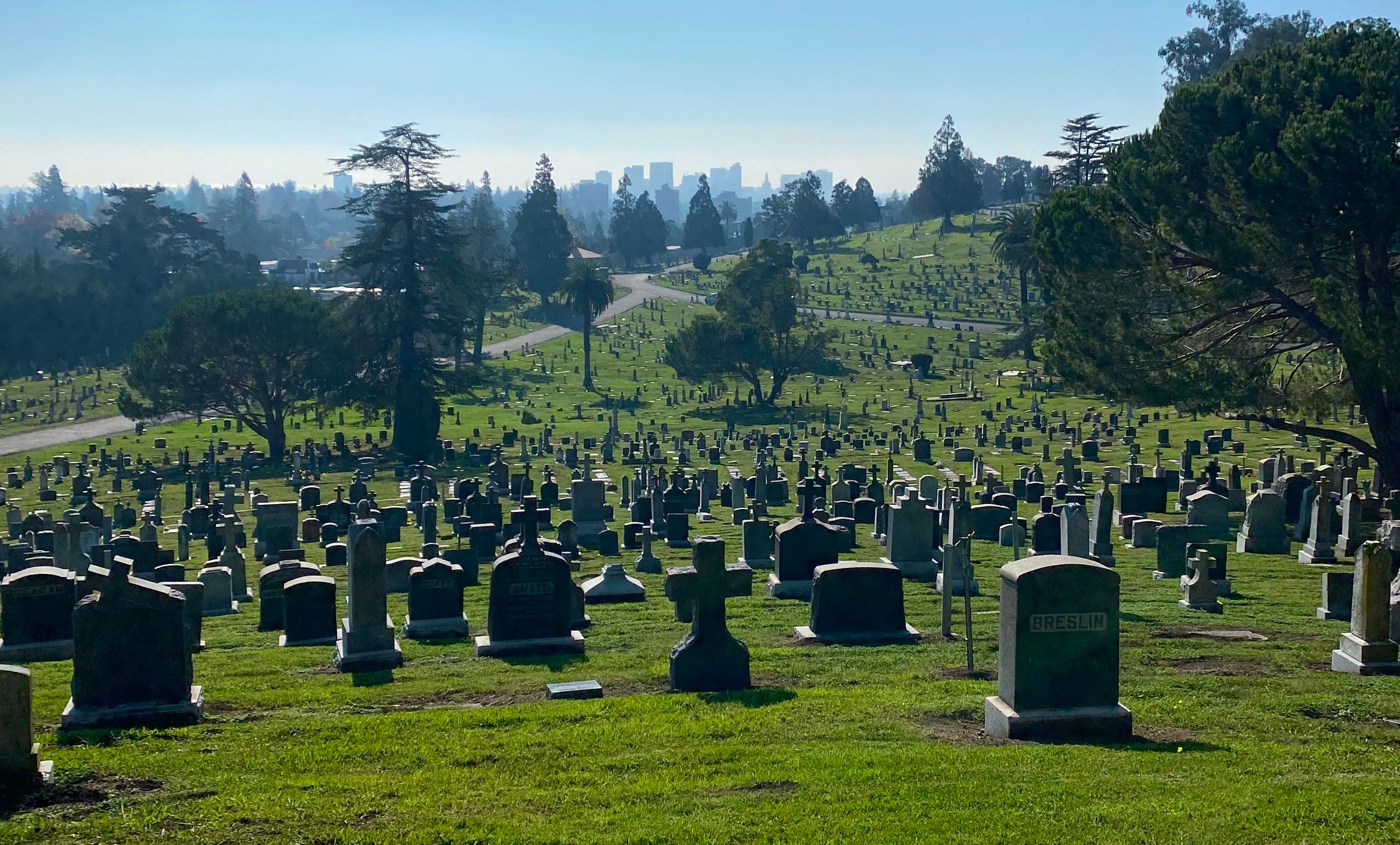
It was also a week before I reached the age that G was when he died—45 days short of turning 33—so death was on my mind. Not to mention that I did kiss his forehead in that small, weird chapel three and a half years ago, nine days after he’d died. So this particular odd, uncanny translation arriving to me from my phone hit me in the chest.
The logic of my phone’s stunning translation is mostly spatial—the letters LET ME KNOW have a similar spatial position on the keyboard as BESAR DIFUNTOS (which means: to kiss the dead).
It’s a similar movement of my thumbs, the same physical action across the keys to locate each of these otherwise unrelated phrases when texting someone.
Does that mean anything?
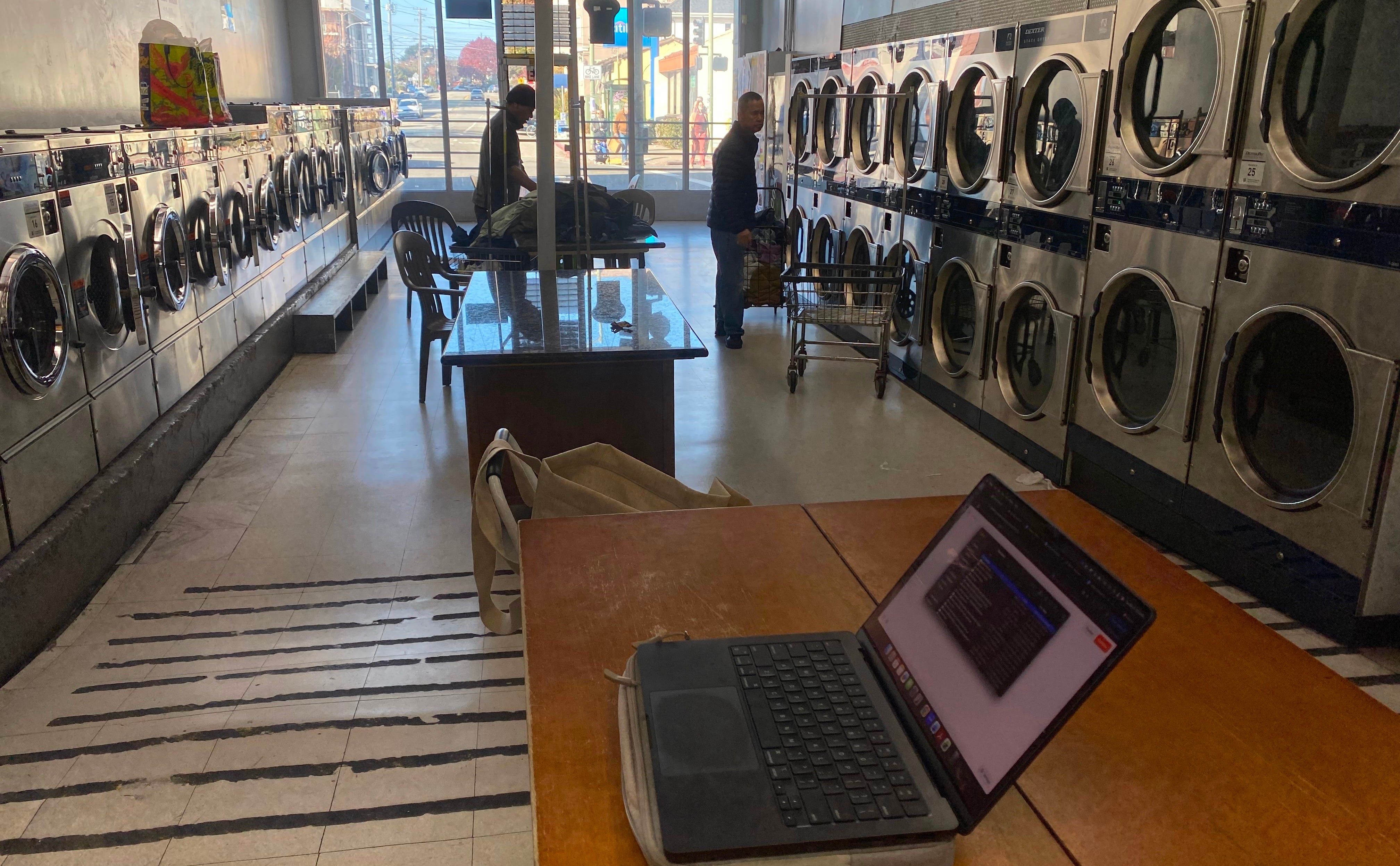
Lately, I’ve been noticing anew how grief and memory seem to arrive not when I go looking for them directly, but when something in the world—a film, an artwork, an old couple kissing in the street—unlocks them. They come slant, sideways, through the thumbs, a mistranslation, a stranger being strange. The body recognizes something before consciousness does. The way a piece of dance can land deeper than any deliberate thinking-through of the thing.
It makes me wonder how much of living is just this: a constant translating between what the world touches and what the body understands, long before language gets involved.
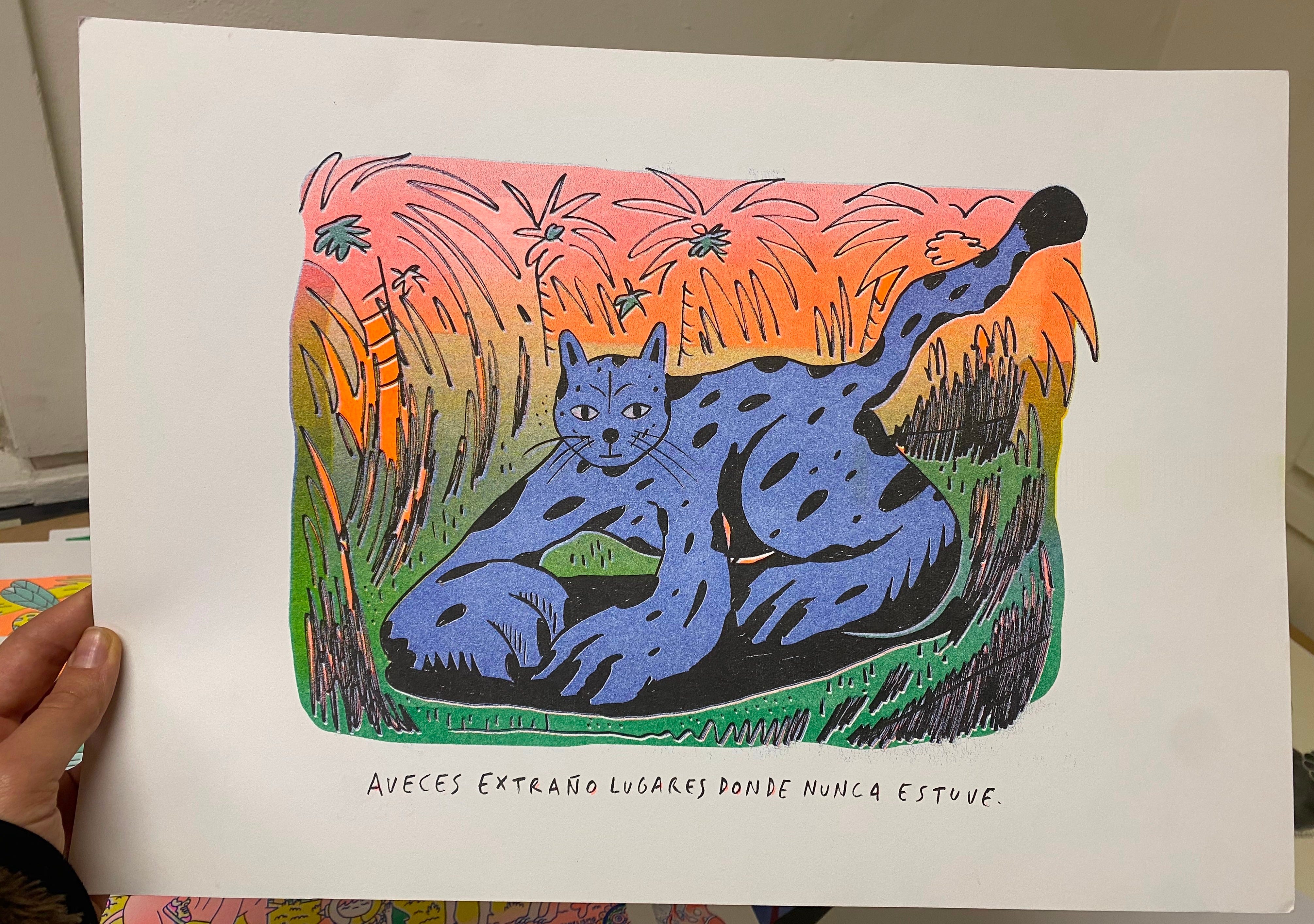
Through writing these last years, I keep learning the same lesson: meaning and emotion hit hardest when they arrive through the body and the subconscious, not the conscious mind’s attempts at clarity (though that’s helpful later in the process). As many an artist has noticed, the body and subconscious are so much smarter, vaster, funnier, and more complete than the small percentage of our brains we can dedicate to conscious thought.
What can we gain from trying to track the non-linear ways that emotion is unlocked?
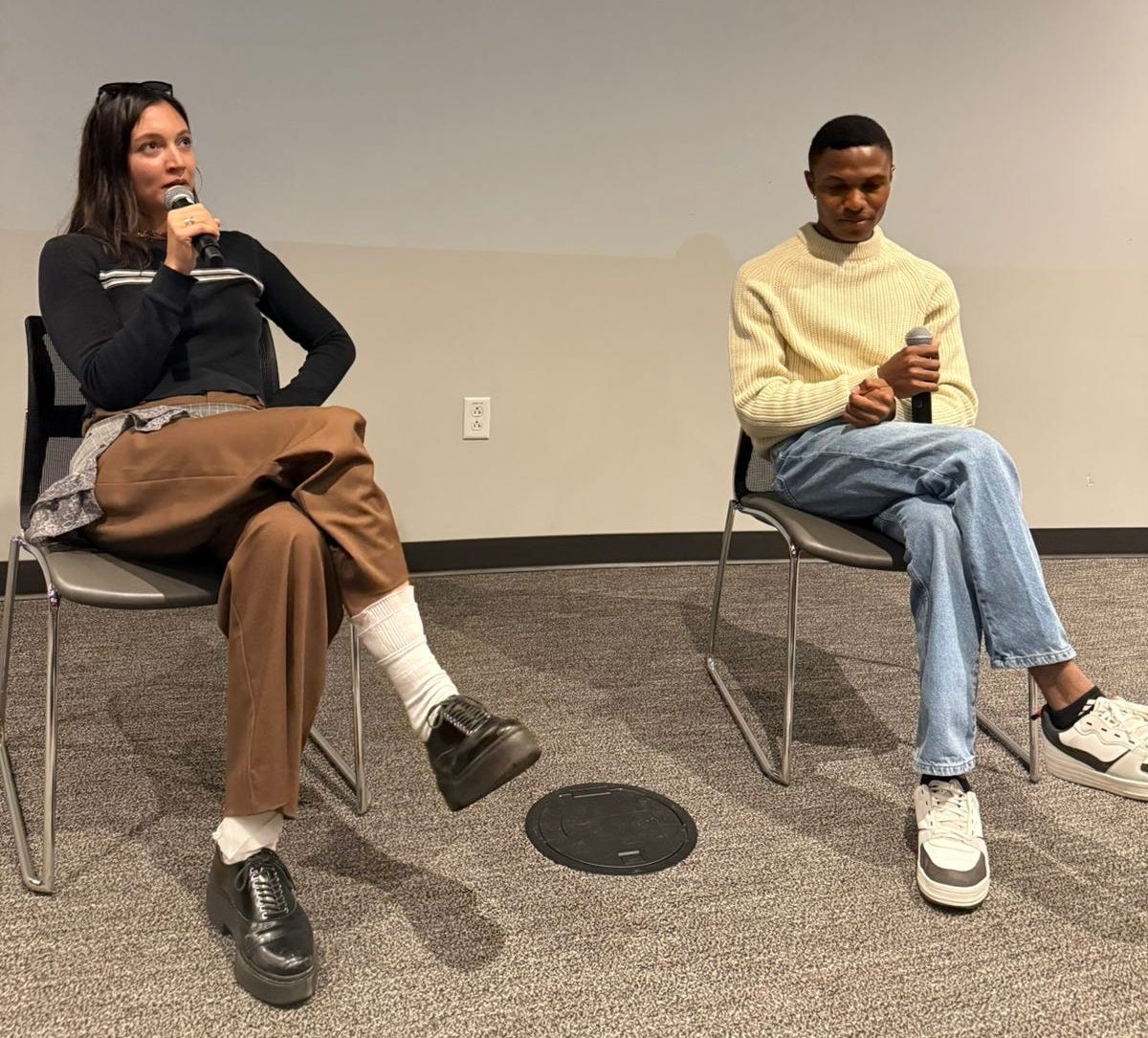
This past year, my writing has been more like diary entries: emergency room visits, a major surgery, breakups, moving to a fascist, declining USA, and being attacked/groped/followed/intimidated by men (mostly young men, younger than me) five times in the last six months. That last part has had me thinking about how emboldened men feel in this sociopolitical moment. (Sidebar: if you’ve noticed something similar or have been attacked recently, I’d really like to hear—it’s been grounding to talk to others and depersonalize these experiences.)
It will probably take a while for the nonlinearity I’m interested in to reach these experiences. For now, it’s hyper vigilance and self-preservation—the obvious information. But the sideways, the slant, the embodied, the way of poetry… that will be there for us when we’re ready <3.
Maybe the real lesson of the generative glitch is this: the body is always reaching for meaning before the mind can catch up. What happens when I can attune myself to that? To notice how the world rearranges itself around a longing before I name it. I don’t know where that leads, just to stay open to the strange, generous paths it offers.
To put off correction, to let the mistranslation stand. To follow it into whatever room it’s pointing toward.
I hope you are all safe and finding life-affirming delights.
Take care of yourselves and each other.
~*~*~*~*~*~*~*~*~*~
OKAY AND TO TEST THE LESSON OF NON-LINEARITY, I HAVE SOME EXCITING NEWS TO FINALLY OFFICIALLY SHARE:
🎉 My debut book of poems is forthcoming with House of Anansi in April 2027 :)))) 🎉
Thank you to so many, but particularly the incredible mentorship I received for this work from Sheryda Warrener and Sonnet L’Abbe, plus important insights and supports from Billy-Ray Belcourt, Gabby Bates, aracelis girmay, and the many new frands I made along the way, and wâpanatâhk (aka Brandi Bird) for connecting me with House of Anansi <333. I’m still ISO a title; I can feel it approaching.
<3333
Dora
>”It makes me wonder how much of living is just this: a constant translating between what the world touches and what the body understands, long before language gets involved.”
I’m drawn to the procedural metaphor—‘a constant translating.’ It frames pre-linguistic, bodily experience not as something fixed or mystical, but as an ongoing activity—something dynamic rather than given. That sense of motion feels closer to what being alive actually entails.
Congratulations on the book🌹
Love this update and so excited for the book release. 2027 doesn’t feel that far away anymore!